Find the Right Server Rack at the Best Price

Pick a server rack that fits your gear, your room and your growth plans, with clear sizing rules for height, depth and load.

  • Independent server rack comparisons
  • 100% independent picks
  • Updated as models change

What do you need?

See all types →

What is your project?

Tell us what you want to build, from a home lab to a small office network, and we will point you to the server rack that fits.

See all uses →

The brands we analyzed

See all brands →

Our buying guides to pick the right server rack

These are the guides we wrote from our analysis of the market, each one built to help you narrow down the server rack that fits your space and your gear. Our picks stay grounded in specifications, buyer feedback and prices.

See all our buying guides →

How we work

  1. 1 What we look at We go through the server racks and network cabinets listed on Amazon, from open-frame and 2-post models to enclosed and wall-mount units, and read each spec sheet for size, mounting type and weight capacity.
  2. 2 How we read reviews We analyze aggregated buyer reviews for recurring comments on rack depth, stability, cable access and ventilation, then check them against listed specs like unit count, enclosure material, item dimensions and compatible devices.
  3. 3 How we rank and recommend We rank racks by use, such as home lab, closet or office corner, and by budget. Weight capacity, depth, cooling and mounting type decide which model fits your gear and your space.
  4. 4 How we stay current We update our pages as models change, show Amazon prices with their date, and add new racks as they appear. We keep no fixed schedule, so each page reflects the listings we last reviewed.

What to know before you buy a server rack for your equipment

Choosing the right server rack for your network gear, servers and home lab raises plenty of questions. Here are the answers and tips we wish we had found in one place.

See all our articles →

Why use our server rack comparisons

We are an independent comparison site, so our rankings follow specifications, customer reviews and prices, never advertiser influence. You get clear picks and the context to choose with confidence.

We cover every kind of server rack you might need
Full catalog

We cover every kind of server rack you might need

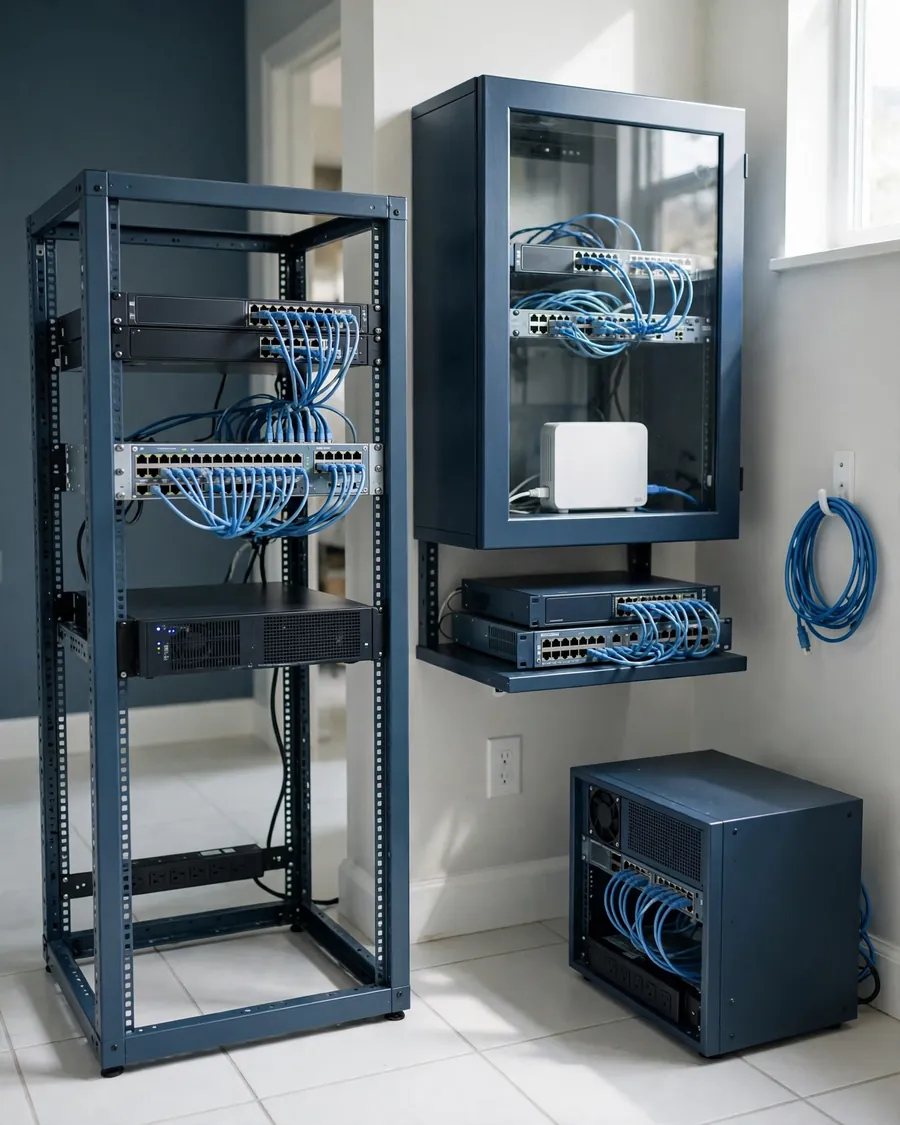
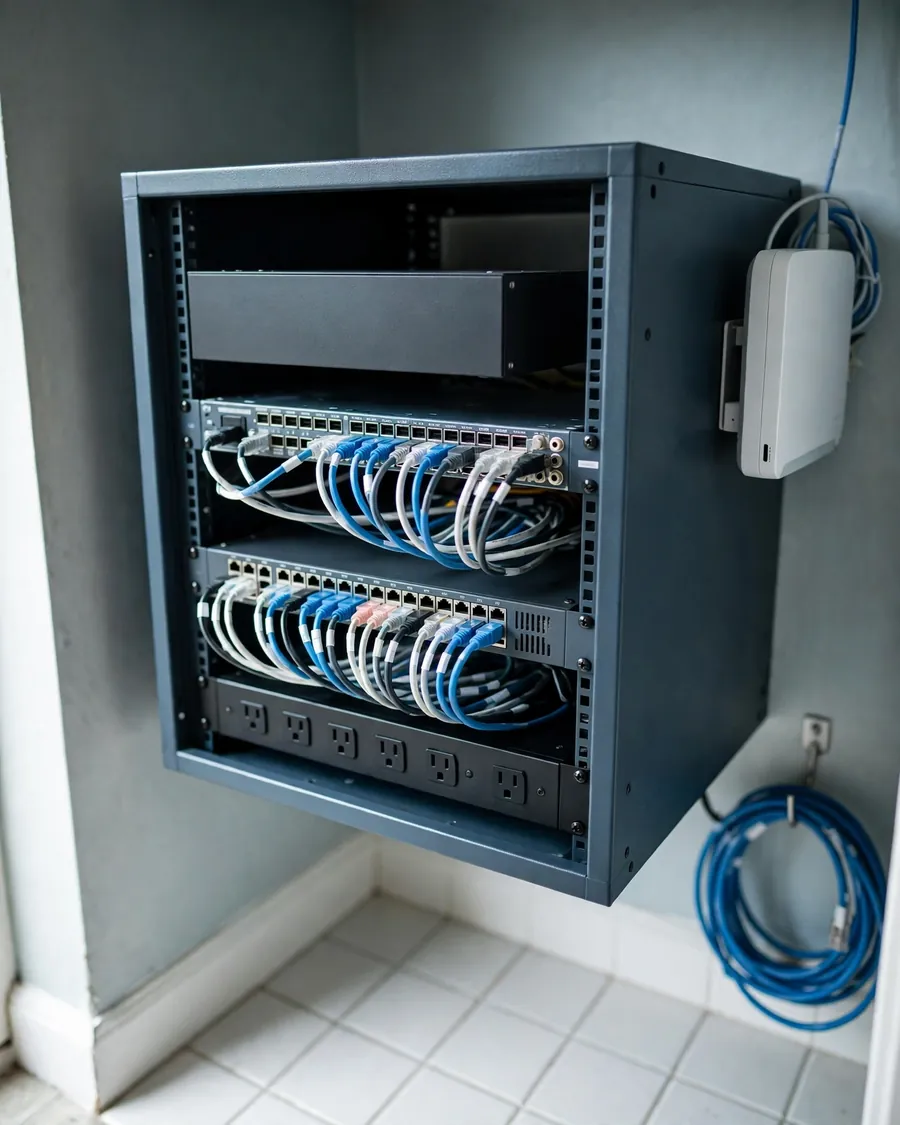
Whether you are outfitting a closet or a full server room, you will find the right family here. We cover wall-mount racks, vertical models, open-frame and 2-post designs, plus desktop units for compact setups.

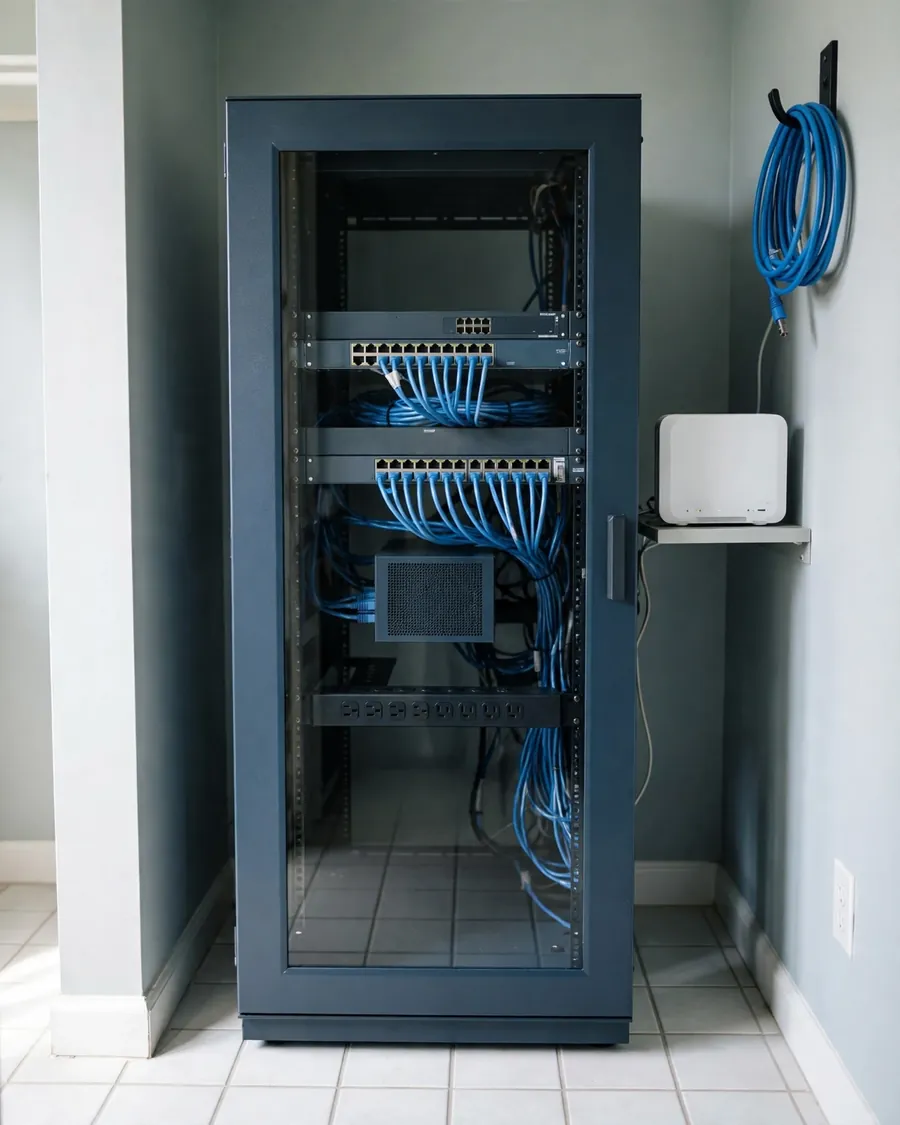
You can also browse enclosures with locking doors, cooled racks for hotter equipment, and models on wheels for easy moving. Half-rack cabinets round out the range for small rooms that need something in between.

Every family has its own buying guide, so you can compare like with like. That keeps your shortlist focused on racks built for your situation instead of a long list of options that do not apply.

We rank server racks on facts you can check yourself
Data-driven picks

We rank server racks on facts you can check yourself

Our rankings rest on three things: manufacturer specifications, aggregated customer reviews and current prices. We look at load capacity, rack unit height, depth and build quality, so you see how each model stacks up on paper.

Customer feedback adds the real-world side. Buyers often praise easy assembly and sturdy frames, and they flag wobbly builds or poor cable room. We weigh those patterns instead of relying on a single glowing or angry review.

Because no advertiser influences our picks, a model earns its place on merit. If a rack has weak specs or a pattern of complaints, it moves down the list no matter how popular the brand is.

We help you match a rack to your space and gear
Real-use advice

We help you match a rack to your space and gear

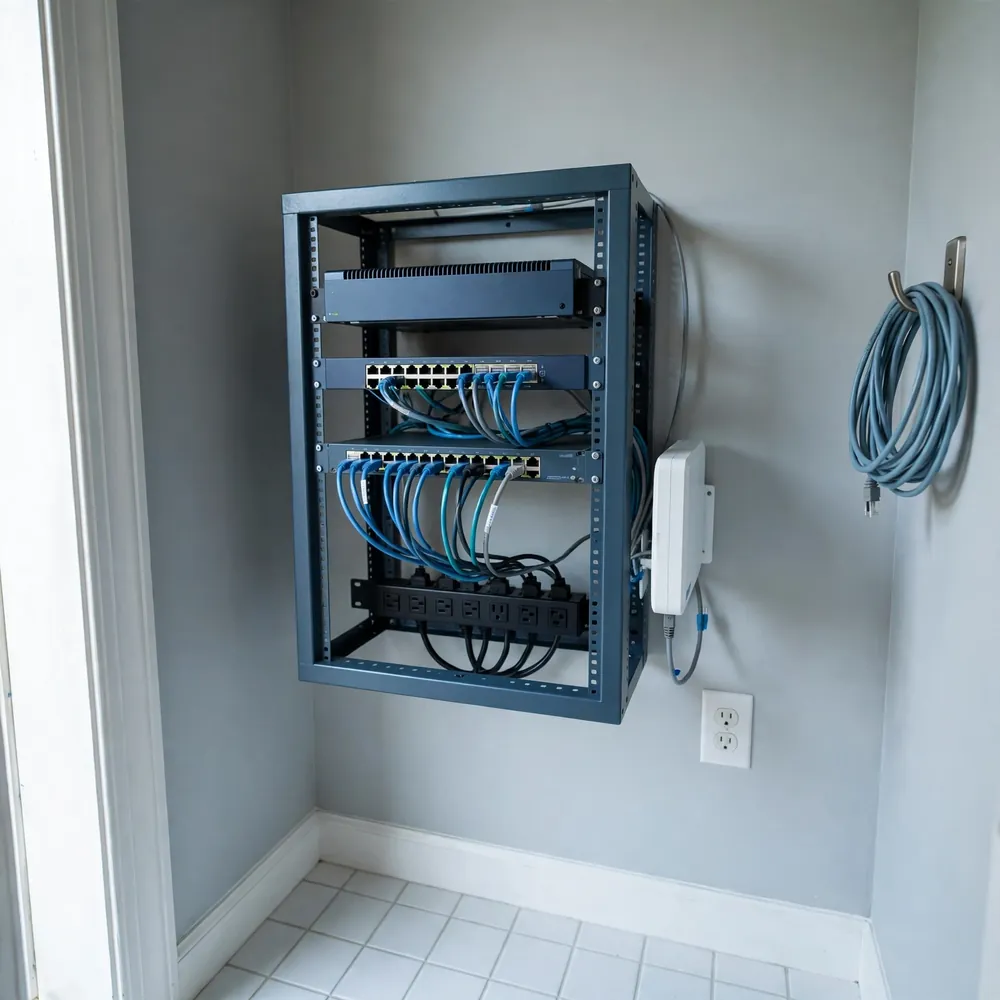
Start with what you need to house. A few switches and a router call for a small wall-mount or desktop rack, while deep servers need a taller frame with the right depth and a strong weight rating.

Then look at the room. Measure your available height, width and depth in inches, and leave space for airflow and cable access. A rack that fits on paper can still feel cramped once everything is plugged in.

Think about noise and heat too. If your gear runs warm or sits in a living area, a cooled or enclosed rack may be worth the extra cost. Our guides point out these trade-offs so you can decide with confidence.

We track prices so you can buy at the right moment
Value for money

We track prices so you can buy at the right moment

A low sticker price does not always mean good value. We look at what you get for the money, from included shelves and hardware to the strength of the frame, so a cheap rack that falls short does not top the list.

Prices on server racks move often, and the same model can cost noticeably more or less from one week to the next. We keep an eye on those changes so you can spot a fair price when you see one.

Our goal is simple: help you pay for what you actually need. Whether your budget is tight or generous, you can find a rack that delivers solid value for the long run without overspending on features you will never use.

400+ Server racks analyzed
100,000+ Customer ratings analyzed
30+ Buying guides

Frequently asked questions

These are the questions buyers ask most about rack capacity, cost, rack types and how airflow and mounting work in a home lab or office.

What should you check on a rack's mounting holes before you order rails and cage nuts?

Rails use square, round or threaded holes, and threaded holes come in No. 10-32, No. 12-24 or metric M6. Your rails and cage nuts must match the hole type, so check it before you order. The holes sit 18 5/16 in apart, center to center, so standard gear lines up on any compliant rack.

What should you check on a rack before you mount a heavy UPS near the top?

Mount the heaviest gear, such as a rack UPS, at the bottom of the rack and lighter gear at the top, because a top-heavy rack tips more easily. Before you load it, confirm the rack's static load rating covers the combined weight of every device you plan to mount, and if the rack sits on casters, read the rolling figure instead, since it is always lower. Also keep the front and rear of the rack clear so cool air enters at the front and hot air exits at the rear.

What is the difference between a data rack and a server rack?

Both use the same 19-inch rails and 1.75 in rack units. A data rack holds switches and patch panels and is often shallow, about 24 to 28 in deep. A server rack is deeper and stronger for heavy servers, about 35 to 39 in deep.

How does a server rack work?

A server rack holds gear on two or four vertical rails with mounting holes 18 5/16 in apart, so every 19-inch device lines up in 1.75 in steps. Cool air enters at the front and hot air exits at the rear, so keep both sides open.