
Best Vertical Wall-Mount Rack 2026: Mounting Switches Flat Against the Wall
When you buy through the Amazon links on this page, we may earn a commission at no extra cost to you. Learn more
Last updated October 31, 2026
The StarTech RK319WALLV is the best vertical wall mount rack for most buyers: a 3U 19-inch bracket that holds switches, patch panels and power strips flat against the wall, rated to 150 lb (68 kg) and backed by a lifetime warranty. It arrives assembled, and it can also hang under a desk.
If your stack is lighter or your budget tighter, the Rackpath 2U and the Jingchengmei MFT-VW04UBB cover a single switch, a router and a patch panel without asking much of the wall.
The best vertical wall mount racks of 2026

StarTech RK319WALLV
See on Amazon
JINGCHENGMEI MFT-VW04UBB vertical rack
See on Amazon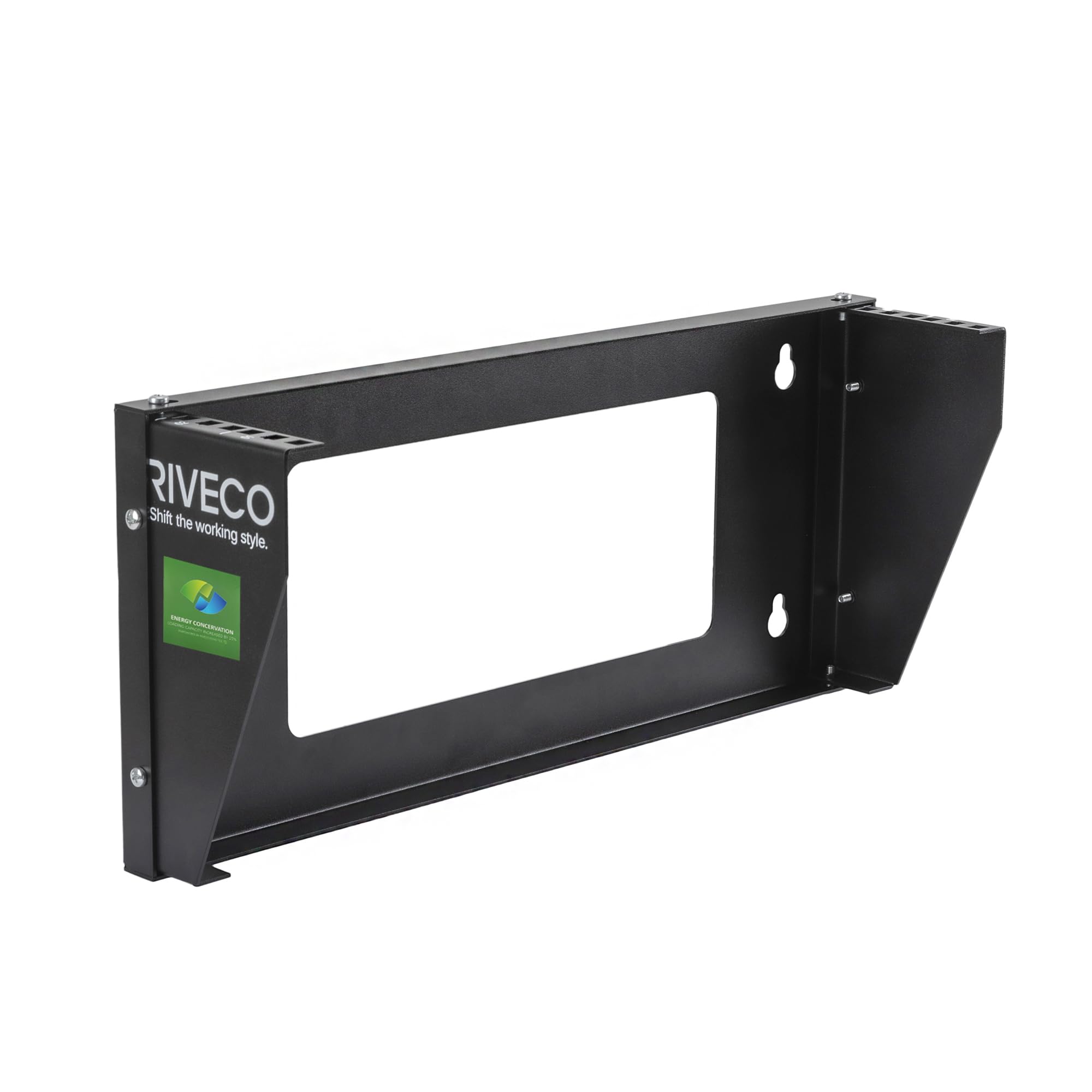
Riveco WPF5202 wall mount rack
See on AmazonModel comparison
| Model | Price | Rating | Rack size | Material | Weight capacity | Best for | |
|---|---|---|---|---|---|---|---|
| | StarTech RK319WALLV | $57.81 as of 10/31 See on Amazon | ★ 4.8 (1,200+ ratings) | 3U | Alloy steel | 150 lb | Buyers who want the strongest bracket here with a lifetime warranty and TAA compliance paperwork to file. |
| | JINGCHENGMEI MFT-VW04UBB vertical rack | $16.79 as of 10/31 See on Amazon | ★ 4.8 (300+ ratings) | 1U | Steel | not stated | Closet or desk-side installers mounting one light switch or patch panel get a 1U vertical frame holding 35 pounds. |
| | Riveco WPF5202 wall mount rack | $55.25 as of 10/31 See on Amazon | ★ 4.6 (100+ ratings) | 2U | not stated | not stated | Buyers who want thicker steel, a longer warranty and a full bolt kit for a mixed rack of network and AV gear. |
 | Mofangtech MFT-VW04UBB vertical rack | $28.99 as of 10/31 See on Amazon | ★ 4.6 (500+ ratings) | 4U | Cold rolled steel | 44 lb | First-time buyers hanging switches and patch panels get cage screws, wood screws and a bubble level in a 44 lb frame. |
 | RackPath 2U vertical wall mount rack | $33.28 as of 10/31 See on Amazon | ★ 4.7 (150+ ratings) | not stated | Alloy steel | 125 lb | Buyers who want a tidy switch-and-patch-panel assembly where marked U positions and included hardware matter. |
How a vertical wall mount rack saves floor space
A horizontal wall rack or a floor cabinet pushes its equipment depth out into the room. A deep switch plus the bend radius of its cables easily eats a foot or more of floor, and that foot is exactly what a closet, a back office or a home-lab corner does not have. A vertical bracket turns the same chassis 90 degrees, so its depth runs up and down the wall and only the faceplate width plus a few inches of standoff come off the wall.
The gain shows up in specific places. A closet too shallow for a cabinet takes a vertical column on the back wall. A back office where a floor rack would block a walkway keeps its aisle. A structured-wiring corner gets its switch and patch panel stacked beside the panel instead of on a shelf below it.
The trade-off is real. You give up easy front-and-back access, because the rear of a device now faces the wall or the side of the column. You also concentrate the load on a tall, narrow footprint, so the wall and the fixings carry more of the decision than they would for a floor rack that stands on its own four posts.
Mounting switches and patch panels sideways
A device in a vertical rack is rotated 90 degrees. Its front panel faces sideways, or up, depending on how you orient the bracket, and its depth runs along the wall. That single rotation changes airflow, port direction and the way cable weight pulls on the connectors.
Airflow changes direction
Front-to-back airflow becomes side-to-side or bottom-to-top. The intake and exhaust no longer line up with the room the way the vendor assumed, so the hot end of the chassis may now blow into a wall, into another device or into the closed side of the frame. Check whether a fanless device's documentation permits side mounting before you commit, and orient the bracket so the hot end lands where air can leave.
Ports and cable exits move
Ports now point sideways or downward. Patch cables and power leads leave the device in a new direction, which changes where you need slack and where a cable can kink against the frame. A switch mounted with ports facing down keeps dust out of the openings, while ports facing up make them easier to read and reach.
Gravity pulls on connectors
In a horizontal rack, cable weight hangs off the back of the device and is carried by the strain relief of the run. In a vertical column, connectors and cable weight pull in a direction the horizontal design never had to handle. Support the bundles and leave a service loop so the connector is not the part holding the cable up.
How to Fix a Vertical Rack to Your Wall So It Carries the Load
A loaded vertical rack hangs its whole weight plus the pull of its cables on a small number of fixings near the top and the bottom of a tall column. That tall lever arm means the top fixings take more strain than the same weight spread across a short, wide shelf. Pull on the bottom of the frame and the top screws feel it first.
Hitting studs matters more here than for a light shelf. Drywall alone is the weak link: it crushes around an anchor under a steady pull, and a column that leans out at the top keeps loading the same holes. When the studs do not line up with the bracket's holes, the common fix is a backboard spanning two studs, screwed into both, with the bracket fastened to the board.
Fixings included with a bracket are often for wood only. Masonry or concrete needs its own anchors, rated for the substrate and for the load you are hanging. Put the bracket up empty, check it is level and tight, and load it afterward, because a frame with gear in it is awkward to lift and easy to drop.
Cable routing and bend radius in a narrow vertical column
In a slim vertical rack, patch cords, fiber and power leads run up and down the column rather than out into the room. They hang. Hanging cable puts a steady pull on connectors and on the patch panel, and that pull never lets up.
Cable management belongs at the entry and exit points. Loop the slack rather than pulling it taut, and tie the heavier bundles to the frame so the weight lands on the tie and not on the plug. Tight bends are the main risk for fiber and for Cat cables right at the connector, where the conductors are least tolerant of a sharp turn.
A vertical column with no side openings makes it harder to reach the back of a device once it is mounted. Leave service loops long enough to pull a device partway out, and strain-relieve the heavier bundles before they reach the panel.
How far your switch and cables need to sit from the wall once the rack is up
A vertical rack needs working space on three sides. Leave enough side clearance to reach the ports and to slide a device in and out of the rails, and enough front clearance to stand and work with both hands. Measure before you buy, because a column that fits the wall but not the person in front of it is a daily annoyance.
A hinged or swing-out vertical rack needs room for the frame to swing away from the wall without hitting a shelf, a door or a pipe. That swing trades some rigidity for access: the hinge is another joint that carries load. A fixed bracket is stiffer, but servicing the rear of a device means unbolting or unscrewing it from the frame.
The taller the column, the more the top and bottom mounts matter when you pull on it. If the rack is enclosed, leave room for the door or lid to open fully, and check that the door clears the cables leaving the bottom of the column.
Our picks by budget
The Jingchengmei MFT-VW04UBB is our budget pick because it puts a 1U 19-inch folding frame, cage screws and nuts, and wood or drywall screws in the box for a light column of switches and a patch panel.
The Rackpath 2U is our mid-range pick because about 0.08 in (2 mm) cold-rolled steel, a 125 lb capacity, square holes with silk-screened U markings and 16-inch wall hole spacing are what a small stack of real gear needs from its fixings and its frame.
The StarTech RK319WALLV is our premium pick because it adds TAA compliance and a lifetime warranty with free lifetime technical support, and arrives assembled.
Budget
Mid-range
High-end
Which vertical wall mount rack for which buyer
Light home lab or single-switch closet
A 1U column for a switch, router or patch panel where the wall is solid and the load stays modest. The 35-pound ceiling is the number to check against your gear.
Small office with a real stack
The 125 lb capacity, square holes and silk-screened U markings suit a switch, patch panel, router and power strip. The 16-inch wall hole spacing lines up with standard studs.
Strongest bracket and compliance
The about 150 lb (68 kg) rating, lifetime warranty and TAA compliance make it the pick when the load is heavy or the purchase goes through a public agency.
Wall now, under a desk later
The frame mounts vertically on a wall or horizontally under a desk, so the same bracket can move with your setup.
Compact 2U with a folding frame
A 2U column with 0.079 in (2.0 mm) steel, a two-year warranty and wall bolts in the box, for a tight closet or a spot beside a wiring panel.
Our verdict on the vertical wall mount racks
Match the U count and the rail length to your deepest device and your device count, match the load rating and the fixings to your wall, then pick the tier. The StarTech RK319WALLV has 150 lb (68 kg) of capacity, a lifetime warranty and TAA compliance. The Rackpath 2U is the best balance of build and load for a typical small stack, with 125 lbs of capacity, square holes and 16-inch wall spacing. The Jingchengmei MFT-VW04UBB is the right entry point for a light column on a solid wall.
Buying too few U leaves you adding a second bracket within a year. Mounting to drywall without studs or a backboard puts a loaded column on the weakest part of the wall.
Detailed model analysis
StarTech RK319WALLV
The StarTech RK319WALLV is a 3U bracket built to EIA-310, the 19-inch standard. It holds gear rotated so the chassis runs along the wall, and the same frame can also go horizontally under a desk.
The alloy steel frame carries 150lb (68 kg), the highest rating on this page. It stands 5.9 inches deep and measures 19.8 inches wide, so the assembly sits close to the drywall.
It arrives fully assembled, so nothing needs bolting together before it goes up. Cage screws and nuts come in the box. It is listed as compatible with network devices, patch panels, power strips, standard wall studs and drywall surfaces.
The lifetime warranty with free lifetime technical support comes with TAA compliance, which matters if you buy for a public agency or resell into one.
It suits buyers who want a warranty that does not expire and compliance paperwork to file. A deep chassis or a long list of devices still needs a taller column.
- Brand: StarTech
- Rack size: 3U
- Weight capacity: 150 lb
- Mounting: Wall mount
- Material: Alloy steel
- Dimensions: 5.9 in deep, 19.8 in wide and 5.9 in high
JINGCHENGMEI MFT-VW04UBB vertical rack
This steel vertical wall mount holds standard 19-inch network gear flat to the wall, with only 2.3 inches of depth coming off it.
The frame is 19.29 inches wide and 3.54 inches tall. The folding design cuts packaging volume by 62%, which keeps the carton small before the install.
Cage screws and nuts come with it, plus screws for mounting to a wood wall or drywall.
It holds network switches, routers, firewalls, patch panels, hubs and modems. The warranty runs one year from the manufacturer.
It suits a home lab or a single-switch closet with a modest load. The maximum load is 35 pounds, which fits a light column of a switch, a firewall, a patch panel and a modem, not a UPS.
- Brand: Jingchengmei
- Rack size: 1U
- Width: 19.29 in
- Max load: 35 lb
- Material: Steel
- Mounting: Wall or under desk
Riveco WPF5202 wall mount rack
The Riveco WPF5202 is a 2U folding open rack that mounts vertically on a wall or horizontally. It holds 19-inch equipment.
Depth off the wall is 3.8 inches, and the folding frame keeps the footprint tight in a closet or beside a wiring panel. The frame is 19.7 inches wide and 8.7 inches tall.
The steel is 2.0 mm thick under a 0.2 mm powder coat, and the unit weighs 5 pounds empty. Maximum load is 66 to 99 pounds, enough for a switch, a patch panel and a small power device.
The box includes eight sets of M6 screws and cage nuts, four M5 rack screws, four wall bolts and detailed instructions. The warranty runs two years.
We see it suiting a compact 2U column where you want a folding frame, a two-year warranty and mounting hardware included. Two rack units fill fast once a patch panel goes in, so count your devices first.
- Brand: Riveco
- Rack size: 2U
- Mounting type: Wall mount
- Max load: 66-99 lb
- Dimensions: 3.8 in deep, 19.7 in wide and 8.7 in high
- Weight: 5 lb
Mofangtech MFT-VW04UBB vertical rack
The Mofangtech MFT-VW04UBB is a 4U bracket that mounts vertically on a wall or horizontally under a desk. It holds 19-inch gear 7.56 inches off the surface, leaving extra room behind the faceplates for cable.
The frame is 0.08 inches (2.0 mm) cold-rolled steel with a powder coat, 19.29 inches wide and 3.94 inches tall, and it arrives assembled.
The maximum load is 44 pounds, enough for a switch, a router and a patch panel in one column. That ceiling rules out a heavy UPS in the same column.
The box holds sixteen sets of M6 screws and cage nuts, four self-tapping wood screws, and a horizontal bubble level to true the frame before the last screw. It mounts to wood walls, concrete walls, desks and ceilings.
You get an easier one-person install thanks to the level and the full hardware kit. The warranty runs one year.
- Brand: Mofangtech
- Rack size: 4U
- Mounting: Wall mount
- Weight capacity: 44 lb
- Material: Cold rolled steel
- Weight: 2.14 lb (0.97 kg)
RackPath 2U vertical wall mount rack
The Rackpath 2U vertical wall mount rack holds 19-inch equipment flat against a wall or horizontally under a desk, with 4.17 inches of depth off the surface.
Its wall holes sit 16 inches center to center, matching the standard stud spacing in US walls.
The frame is 0.08 inches (2 mm) cold-rolled steel with a black powder coat, 19.3 inches wide and 3.94 inches tall, and it arrives assembled. Capacity is 125 lbs (57 kg), well above a switch and a patch panel.
Square rack holes take standard cage nuts, and the U positions are silk-screened on the frame so you can line up a device without counting holes. Six wood screws and washers plus ten M6 screws and cage nuts are included.
It suits a small office or network closet with a real stack: a switch, a patch panel, a router and a power strip.
- Brand: Rackpath
- Weight capacity: 125 lb
- Dimensions: 19.29 in wide, 4.17 in deep and 3.94 in high
- Weight: 1.5 lb
- Material: Alloy steel
- Mounting hole spacing: 16 in
Frequently asked questions
What is a vertical wall mount rack, and how is it different from a horizontal wall rack?
A vertical rack holds 19-inch equipment turned 90 degrees so the chassis runs along the wall, and it comes off the wall by a few inches. A horizontal wall rack keeps the gear upright and pushes its full depth into the room, which is why it needs far more clearance.
Can I mount a network switch vertically, and will it still work and stay cool?
It works, but the air no longer enters and leaves the way the vendor designed it. Check the switch's documentation for permitted mounting orientations, and place the hot end where air can escape rather than against a wall or another device.
Does a vertical rack fit equipment of any depth?
Only up to the rail length of the frame. The chassis depth runs along the wall, so a short bracket will not take a deep device even with free units above it. Measure your deepest chassis and compare it with the rail run before buying.
How far will a vertical rack stick out from the wall?
The standoff is the frame's depth, which runs from about 2.3 inches to 7.56 inches among the brackets on this page. Add a little for cable leaving the faceplates when you measure the space.
How do I keep cable weight off the connectors in a vertical column?
Anchor the heavier bundles to the frame itself so the tie carries the load and the plug does not. Give each run a loop of spare cable rather than a straight, tight pull, and watch the bend right at the connector, where fiber and Cat cables tolerate a sharp turn least. Cable management belongs at the points where runs enter and leave the column.
Are the wall anchors included, and will they work on brick or concrete?
The screws in the box are usually for wood, and some brackets add drywall screws. Masonry calls for anchors made for it and rated for the weight you are hanging, so plan on buying them separately.
Which way should the ports face when a switch is mounted sideways?
Either way works, and the choice is practical. Whichever you pick, support the cables so their weight does not hang on the connectors, and leave a service loop of at least a few inches so a plug is never the part holding the run up.