
Best 10-Inch Rack 2026: Mini Racks for Raspberry Pi and Small Homelab Gear
When you buy through the Amazon links on this page, we may earn a commission at no extra cost to you. Learn more
Last updated October 31, 2026
The GeeekPi DeskPi RackMate T1 is the best 10-inch rack for most small homelabs: its 8U of height holds several Raspberry Pi or mini-PC shelves, a switch, a patch panel and a PDU, and the aluminum frame keeps it light enough to move. Its 7.8-inch depth is the catch, so measure your deepest device before you commit.
If a small NAS or deeper gear is part of the plan, the Tecmojo 12U mini rack gives you 10.23 inches of depth and a fuller kit of shelves. For a first Pi cluster, the Tecmojo 4U mini rack is the cheapest way in.
Our 3 picks

GeeekPi DeskPi RackMate T1
See on Amazon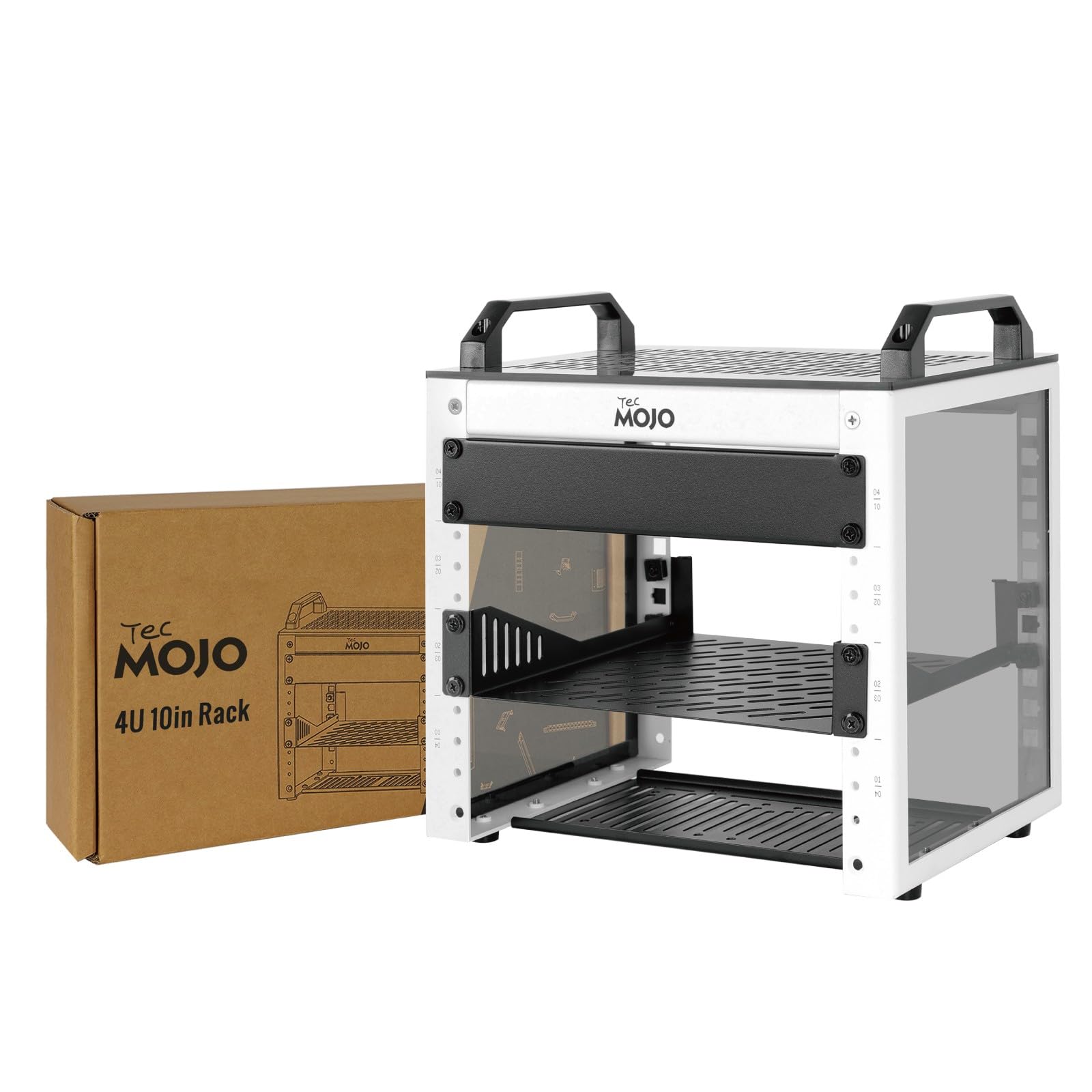
Tecmojo 4U 10-inch mini rack
See on Amazon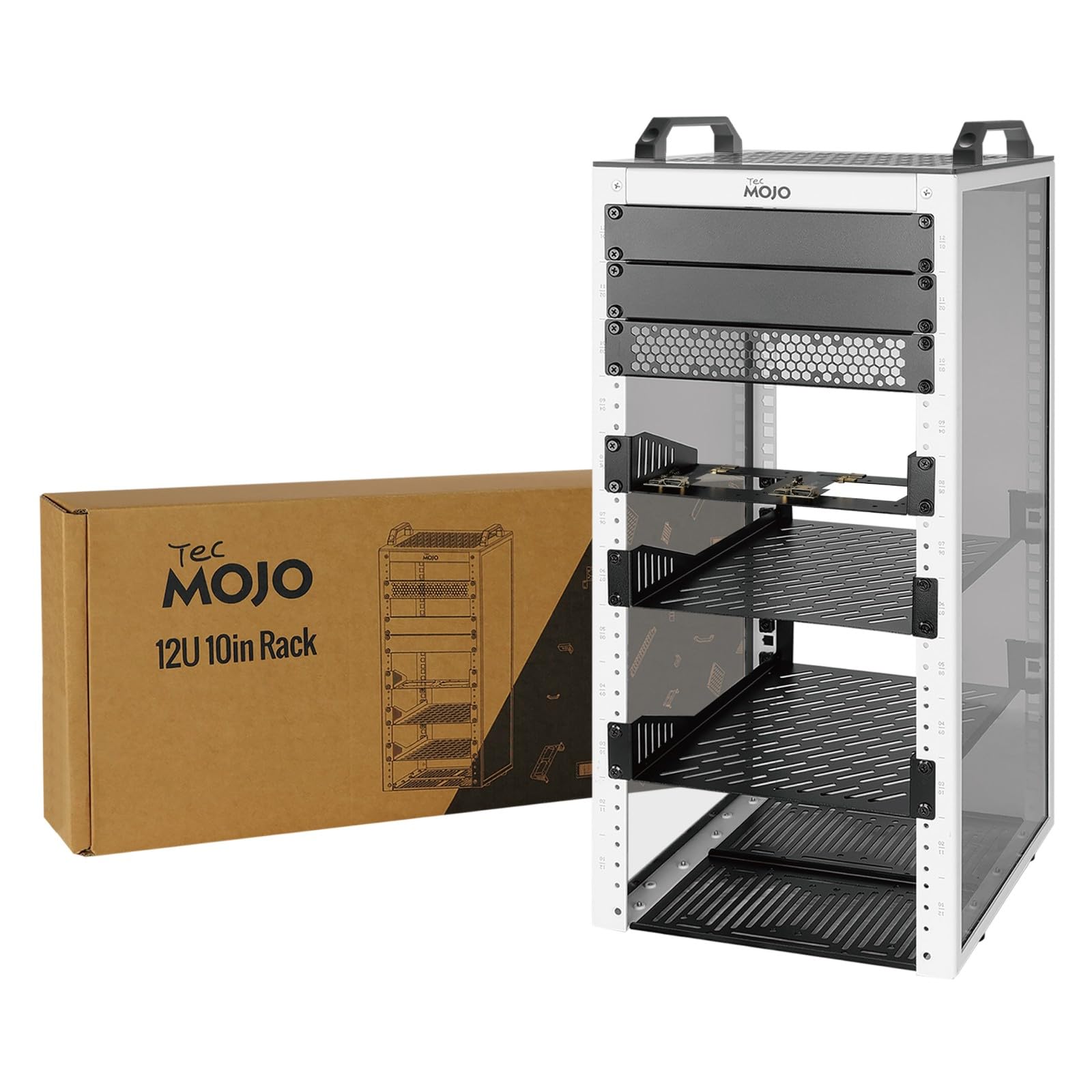
Tecmojo 12U mini rack
See on AmazonModel comparison
| Model | Price | Rating | Weight | Material | Rack height | Best for | |
|---|---|---|---|---|---|---|---|
| | GeeekPi DeskPi RackMate T1 | $119.99 as of 10/31 See on Amazon | ★ 4.6 (300+ ratings) | 10.49 lb (4.76 kg) | Aluminum alloy and acrylic | 8U | Small-network owners with half-width gear get 8U of aluminum framing with acrylic side panels that resist dust and cut weight. |
| | Tecmojo 4U 10-inch mini rack | $59.90 as of 10/31 See on Amazon | ★ 4.6 (150+ ratings) | 6.1 lb | Alloy steel with acrylic side panels | not stated | Home lab tinkerers moving a half-width stack around get a 4U 10-inch frame with two top handles, a blank panel and a rack shelf. |
| | Tecmojo 12U mini rack | $139.90 as of 10/31 See on Amazon | ★ 4.5 (150+ ratings) | 13.6 lb | Alloy steel | 12U | Homelabs mixing mini-PCs, a switch and a small NAS get 12U of open frame with 10.23 inches of depth. |
 | Tecmojo 6U 10 inch rack | $79.90 as of 10/31 See on Amazon | ★ 4.3 (90+ ratings) | 16 lb | not stated | not stated | Readers who need the rack off the desk and lockable get a 6U wall-mount cabinet with a locking glass door. |
What a 10-inch rack actually fits
The 10 inches in the name is the width of the front panel including the mounting ears, not the space your gear gets. The clear opening between the rails is roughly 8.75 in (222 mm), and the figure to plan around is about 8.45 in (210 mm) of device width, because rails, screws and cage nuts eat into the opening.
Gear that genuinely belongs in that space includes Raspberry Pi and other single-board computer clusters, mini-PCs in the small form-factor desktop class, compact and desktop switches, 10-inch patch panels, small PDUs and power strips, cable managers and small NAS units. For a NAS, depth is the limiting factor, not width: a short chassis fits, a long one does not.
What does not belong is anything built for a 19-inch opening: rackmount servers, rack UPS units, 24- or 48-port switches and disk shelves. A 19-inch device is wider than the opening and will not go in, whatever the adapter. Note also that 10-inch is not an exact half of 19-inch, since the opening is 8.75 inches against 8.875 inches, so "half rack" is a nickname, not a measurement.
How 10-inch rack units and heights work
A rack unit is 1.75 inches (44.45 mm) in both 10-inch and 19-inch racks, and the vertical hole pitch is the same, so the U math you know from a full-size rack carries straight over. The arithmetic is simple: 4U is 7 inches, 6U is 10.5 inches, 8U is 14 inches, 9U is 15.75 inches and 12U is 21 inches of usable height.
To pick a height, add the U of every device you plan to mount. Add one U per device that rides on a shelf and needs clearance above it, leave a blank U between hot devices, and reserve at least one or two U for growth. A switch, a patch panel, a PDU and two shelves already come to about 6U before you count a NAS.
10-inch racks come in short heights, from 4U to 12U, because they are desktop and wall units rather than floor cabinets. That makes the height choice less forgiving: buying one size up is cheaper than buying twice, and a 4U unit that looked generous on paper fills up the moment a second device arrives.
Depth and clearance in a mini rack
10-inch racks are shallow by design, commonly around 8 to 12 in (200 mm to 300 mm), because they hold small gear. Depth is the one dimension you cannot change later, so it decides the purchase more often than height does.
Measure the deepest device you own, then add about 2.4 to 3 in (60 to 75 mm) for cable bend radius and connectors at the rear, plus a little airflow space. Compare that total with the rack's usable depth, not its outside depth. Rear rails, a rear door and a brush strip all eat into the figure, and a rack advertised at one depth can leave noticeably less room once the door is closed.
Shelves and fan panels are depth-specific too. An accessory bought for a shallow rack may not fit a deeper one, and the reverse, so check the depth of the shelf against the depth of the rack before you order both.
Mounting small devices without standard ears
Most gear in a 10-inch rack has no rack ears at all. Mini-PCs, single-board computers and desktop switches ride on trays instead of bolting to rails, and that changes how you plan the build.
The options are 1U shelf trays, SBC shelves, mini-ITX shelves, DIN rail brackets, VESA brackets, purpose-made Raspberry Pi rack mounts and 3D-printed cradles. A shelf tray is the general answer; a purpose-made SBC shelf holds several boards in one U and keeps the wiring tidy.
Weight is the rule that matters. Cantilever shelves are held only at the front rails, and a short rail span tolerates less leverage than a full-depth 19-inch rail, so heavy items go low and near the front. Racks typically ship with one or two shelves covering only part of the space, so budget a shelf per node rather than assuming the box has you covered.
Cooling and power in a compact 10-inch setup
Small enclosed racks heat up because there is little free volume, the side panels are acrylic or solid, and there is no chassis fan moving air through. Most 10-inch builds are fine passively at low internal heat and need a fan once the total draw climbs past roughly 60 to 90 W.
The layout rules are simple: exhaust at the top, passive intake low, a blank U between hot devices, and vented shelves rather than solid ones so air can move past the gear. A single small fan at the top of the frame is usually enough for a Pi cluster and a switch.
On power, much mini gear runs on 12 V DC barrel adapters, so a compact DC PDU or a short surge strip mounted at the rear replaces a pile of wall warts. Route cables with a brush strip or a cable manager, because the space behind 10-inch rails is tight. There is no purpose-built 10-inch UPS, so a small tower UPS sits beside or below the rack.
Wall mounting and desk placement for a 10-inch rack
A 10-inch rack can sit on a desk or shelf, go under a desk, or hang on a wall bracket or inside a wall cabinet. The choice comes down to how often you reach the gear and whether dust and access need controlling.
For wall mounting, weigh the rack loaded with gear, identify the wall material (masonry versus stud and drywall), and match the fixing to that weight. These racks are light enough that a modest fixing is usually adequate, but calculate the load with gear in it, not empty, and use a fixing rated for the wall you have.
Enclosed wall cabinets suit a hallway, closet or AV cupboard where dust and access need controlling. Open frames suit a desk, where you want to see indicator lights and reach gear easily without opening a door.
Our picks by budget
The Tecmojo 4U mini rack is the budget pick because it is the smallest and least expensive way in, and it ships with a shelf and a blank panel, so a first Pi cluster needs nothing else to start.
The GeeekPi DeskPi RackMate T1 is the mid-range pick because 8U doubles the height of the entry rack and the aluminum frame keeps it light, which is the sweet spot for a small homelab with several nodes.
The Tecmojo 12U mini rack is the premium pick because it buys height, extra depth for deeper gear and cabling, and enough shelves and adapter boards to mount several earless devices without buying extras.
Budget
Mid-range
High-end
Which 10-inch rack for which buyer
The right rack follows from what you are mounting: a Pi cluster, a mixed homelab with a NAS, or gear that has to be locked away.
First mini rack on a budget
It ships with a shelf and a blank panel, so a starter cluster goes in without extras. The top handles make it easy to move around.
Raspberry Pi cluster builder
Eight units leave room for several SBC shelves plus a switch and a patch panel, and the rack can stand vertically to save desk space.
Mixed homelab with a small NAS
The extra depth and the included shelves and adapter boards cover gear that has no ears, including a short NAS chassis.
Small office or AV cupboard
A lockable tempered glass door, vented side slots and a 110 lb load capacity keep gear enclosed and off the desk, within its about 9.9 in (251 mm) maximum mountable depth.
Our verdict on the best 10-inch racks
The GeeekPi DeskPi RackMate T1 takes the top spot for the typical reader because 8U is the height that fits a real small homelab without wasting desk space, and the aluminum frame keeps it light. The Tecmojo 12U mini rack is the pick when depth and included shelves matter more than footprint, and the Tecmojo 4U mini rack is the right first rack for someone starting with a Pi cluster. The Tecmojo 6U 10 inch rack is the answer only when the rack must be enclosed, lockable and off the desk. One rule decides most purchases: measure depth first, then count U.
Detailed model analysis
The clear width between the rails and the usable depth decide whether a 10-inch rack works at all, and depth is the one dimension you cannot change after the purchase.
GeeekPi DeskPi RackMate T1
The GeeekPi DeskPi RackMate T1 gives you 8U of mounting height, which works out to 14 inches. That fits several Raspberry Pi shelves, a small switch and a patch panel in one column.
The frame is aluminum alloy and the rack weighs about 10.5 lb (4.76 kg). It stands 16 in high and 11 in wide, and you can place it horizontally or vertically.
The open design lets you reach every device, and air moves around your gear. Both sides are translucent acrylic, which resists dust and shows status lights.
It arrives flat-packed with assembly hardware. Shelves, blank panel, patch panel and cable manager are not included. It takes only 10-inch wide gear, and its warranty lasts just 6 months, while Tecmojo racks carry 3 years.
Against the Tecmojo 12U mini rack, which weighs 13.6 lb, it is easier to lift, though it holds fewer units. Against the Tecmojo 4U mini rack, it doubles your height from 4U to 8U.
It suits small homelab owners with half-width gear who want a light, open rack and accept buying shelves separately.
- Brand: GeeekPi
- Rack height: 8U
- Rack width: 10 in
- Dimensions: 7.8 in deep, 11 in wide and 16 in high
- Weight: 10.49 lb (4.76 kg)
- Material: Aluminum alloy and acrylic
Tecmojo 4U 10-inch mini rack
The Tecmojo 4U mini rack weighs 6.1 lb and stands 11 in high, 11.02 in wide and 7.87 in deep. Two top handles let you lift and move it when your stack changes rooms or desks.
The kit includes one rack shelf, one blank panel and the mounting hardware. Compatible gear includes 10-inch patch panels, network switches, cable organizers and power strips, so you can grow the stack piece by piece.
Two translucent acrylic side panels keep dust off and let you see device lights. The open frame helps airflow around your gear. The frame is alloy steel in white, backed by a 3-year manufacturer warranty.
Height is the main limit. With only 4U, a switch, a patch panel and a few shelves fill it fast. It takes only 10-inch wide gear, and the devices you mount are not included.
The Tecmojo 4U mini rack suits first-time Pi cluster builders and home lab tinkerers who want a light, portable 10-inch rack.
- Brand: Tecmojo
- Rack size: 4U, 10 in wide
- Dimensions: 7.87 in deep, 11.02 in wide and 11 in high
- Weight: 6.1 lb
- Material: Alloy steel with acrylic side panels
- Color: White
Tecmojo 12U mini rack
The Tecmojo 12U mini rack gives you 12U of mounting height in a tall white alloy steel frame. It is 10.23 in deep and weighs 13.6 lb.
That depth gives a small NAS or a deeper mini PC more room than the Tecmojo 4U mini rack. The open frame supports airflow.
It comes with 3 shelves and 3 blank panels, plus 2 micro adapter boards and the mounting hardware. The SBC shelf holds a Raspberry Pi beside your switch and NAS.
Two top handles help you lift it, and two translucent acrylic side panels keep dust off and show device lights. The 3-year manufacturer warranty compares with 6 months on the GeeekPi DeskPi RackMate T1.
The trade-off is size. At 13.6 lb, it is heavier and taller than the Tecmojo 4U mini rack. It takes only 10-inch wide gear, and the patch panel, switch and power strips are not included.
It suits deeper homelabs mixing mini PCs, a switch and a small NAS that need depth and ready shelves. You can start with a few devices and add more later.
- Brand: Tecmojo
- Rack height: 12U
- Rack width: 10 in
- Dimensions: 10.23 in deep, 11.02 in wide and 25.03 in high
- Weight: 13.6 lb
- Material: Alloy steel
Tecmojo 6U 10 inch rack
The Tecmojo 6U 10 inch rack mounts on the wall, which gets your gear off the desk. It offers 6U of mounting height behind a reversible tempered glass door with a lock.
The steel body has an electro-static powder coating and supports up to 110 lb. The rack itself weighs 16 lb. Vented side slots improve airflow.
The glass door is reversible, so you choose which side it opens from. The lock protects your connections. Brush panels and a cable manager keep wiring tidy.
It meets CE and NEMA Type-1 standards, and ships with installation hardware and assembly instructions. A 3-year manufacturer warranty backs it.
Mountable depth is the limit. The maximum mountable depth is about 9.9 in (251 mm), so deep gear will not fit. It takes only 10-inch wide gear.
The GeeekPi DeskPi RackMate T1 has no door at all, while this cabinet shuts your gear behind glass. It suits readers who want a lockable wall rack.
- Brand: Tecmojo
- Rack size: 6U
- Equipment width: 10 in
- Dimensions: 13 in deep, 12.3 in wide and 11.8 in high
- Weight: 16 lb
- Load capacity: 110 lb
Frequently asked questions
Fit questions come up before anything else, and the answers turn on the opening between the rails and the depth behind them.
How do I check that my gear will fit before ordering?
Check the width first: a device needs to stay within about 8.45 in (210 mm) to clear the rails, screws and cage nuts. Then check the depth, since a rack's usable depth is always less than its outside depth once rear rails, a door or a brush strip are counted, and a device that fits on paper can still be blocked by the door.
Do mini-PCs and Raspberry Pis have rack ears?
Generally no. They mount on shelf trays, SBC shelves, DIN rail or VESA brackets, or 3D-printed cradles, so plan one shelf per device and put the heavy ones low and near the front.
Do I need a fan in a 10-inch rack?
Not at low heat loads. Below roughly 60 to 90 W of total draw, passive airflow is usually enough, so a fan is only needed once the internal heat climbs past that range.
Can I put a UPS inside a 10-inch rack?
No rack-mount UPS is made for this width, so a small tower unit sits beside or below the frame, while a compact DC PDU or short surge strip handles the gear inside.
What screws do 10-inch racks use?
It varies by model: some use square holes with cage nuts, others threaded screws. Check the rack's hardware pack and sheet before buying accessories, since the thread has to match.
Can a 10-inch rack stand vertically?
Some models are listed for horizontal or vertical placement, which saves desk space. Check the sheet of the model you are considering before you plan the layout.